
The Hedonic Treadmill: When Enough Is Never Enough
Let Me Off...

The election of President Trump in 2024 was a triumph for the MAGA movement who saw it as a chance to reclaim their vision of America. Yet, the happiness they expected often remains out of reach, not because the victory was hollow, but because human nature and modern culture conspire against contentment. Our addiction to chaos, our need to argue, and the relentless pull of the hedonic treadmill keep us chasing the next fight rather than savoring the moment.
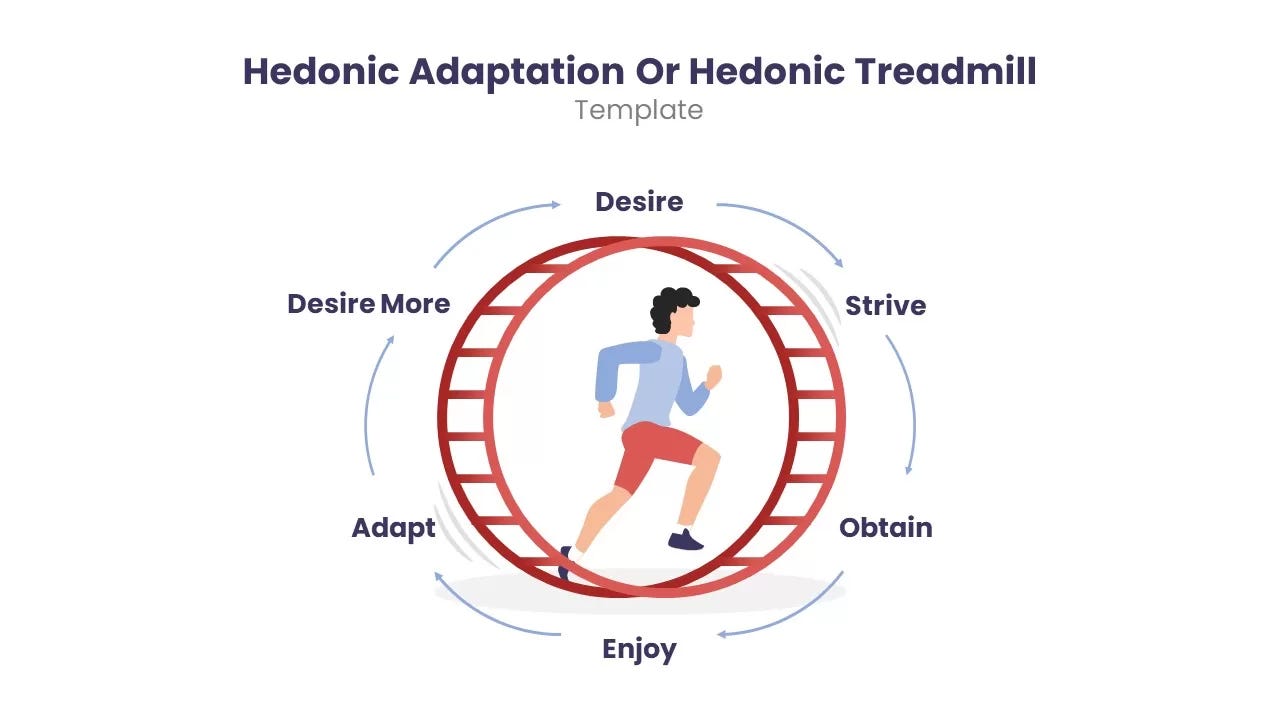
The Hedonic Treadmill—the psychological tendency to return to a baseline level of happiness regardless of positive or negative life changes. This may be the reason we are letting the happiness slip through our fingers. For Trump supporters, the euphoria of victory is real but fleeting. The campaign trail was a rollercoaster of rallies, debates, and social media battles, each moment charged with purpose and anticipation. Once the goal is achieved, however, the absence of that intensity leaves a void. The policies they championed—border security, deregulation, or energy independence—may be in motion, but the slow grind of governance lacks the adrenaline of the fight. Humans are wired to chase goals, not to savor their attainment, and so the mind quickly shifts to new grievances or threats, real or perceived.
This phenomenon isn’t unique to Trump’s base. Across the political spectrum, people struggle to sustain satisfaction after achieving what they thought would make them whole. The pursuit of happiness, it turns out, is less about outcomes and more about the chase itself.
The Addiction to Chaos
Modern life, amplified by social media and 24/7 news cycles, has conditioned us to thrive on chaos. The 2024 election cycle was a masterclass in this dynamic, with X posts, Telegram chats, viral memes, and news segments fueling a constant state of outrage and urgency. For Trump supporters, the campaign was a battle against a litany of foes: the “deep state,” mainstream media, and progressive elites. Each clash—whether a fiery debate moment or a policy win—provided a dopamine hit, reinforcing the cycle of conflict and reward.
When the election dust settles, this chaos addiction becomes a liability. Without a clear enemy to rally against, supporters may turn inward, nitpicking policy details or squabbling over who deserves credit. Others may seek new battles, amplifying minor issues into existential threats to keep the adrenaline flowing. This isn’t mere restlessness; it’s a cultural dependency on high-stakes drama. We’ve become so accustomed to the noise that silence—or even progress—feels unsettling.
The Need to Argue and Fight
Humans are inherently social creatures, and conflict is a fundamental part of how we define ourselves. The election of Trump, rather than resolving divisions, often deepens them, as supporters and opponents alike dig into their respective trenches. For those who backed Trump, the fight doesn’t end with his inauguration. Instead, it shifts to defending his every move, countering critics, or purging perceived disloyalty within their own ranks. This need to argue is less about policy and more about identity. Supporting Trump, for many, isn’t just a political stance—it’s a way of life, a badge of belonging to a tribe that thrives on defiance.
This compulsion to fight is exacerbated by our polarized environment. Social media platforms like X reward hot takes and viral dunks, not nuanced reflection. A supporter who spent years arguing online about election fraud or media bias doesn’t simply switch off that instinct when their candidate wins. Instead, they seek new fronts—perhaps targeting moderates who aren’t “MAGA enough” or amplifying fears of sabotage by lingering establishment forces. The fight becomes its own reward, a way to feel alive and relevant in a world that moves too fast.
The Cultural Divide and the Search for Meaning
Beyond psychology and media dynamics, there’s a deeper cultural issue at play: a crisis of meaning. For many Trump supporters, his election was about more than policy—it was a rejection of a system we felt had left us behind. Economic stagnation, cultural shifts, and a sense of being dismissed by elites fueled our resolve. Yet, even with Trump in office, the underlying dislocations—job insecurity, community erosion, or a sense of lost identity—don’t vanish overnight. Victory in the political arena can’t fully address these existential aches, leaving supporters to grapple with the same unease they felt before.
This gap between expectation and reality breeds disillusionment. When the promised golden age doesn’t materialize instantly, some turn to scapegoats—RINOs, bureaucrats, or even Trump himself for not moving fast enough. Others double down on conflict, seeking meaning in the struggle rather than its outcome. Fighting, in this sense, becomes a way to assert control in a world that feels chaotic and unpredictable.
Breaking the Cycle
So, what’s the path to lasting happiness after a victory like Trump’s election? It’s not about abandoning conviction or ignoring real challenges. Instead, it requires a conscious shift in focus. Here are a few steps that might help:
Embrace the Mundane: Governance is slow and messy. Finding joy in small, tangible wins—like a local policy change or a community initiative—can ground us in reality rather than chasing the next big fight.
Redirect Energy: The passion that fueled the campaign can be channeled into constructive outlets—volunteering, building local networks, or learning about policy in depth. Purpose doesn’t have to come from conflict.
Limit Chaos Consumption: Reducing time on social media or outrage-driven news can break the cycle of adrenaline dependency. Curate feeds to prioritize information over provocation.
Seek Common Ground: Engaging with opponents not as enemies but as fellow Americans with different views can humanize the “other side” and reduce the need for perpetual combat.
Find Meaning Beyond Politics: Political victories are fleeting. Investing in relationships, personal growth, or spiritual practices can provide a deeper sense of fulfillment that no election can touch.
Conclusion
The election of President Trump in 2024 was a triumph for millions who saw it as a chance to reclaim their vision of America. Yet, the happiness they expected often remains out of reach, not because the victory was hollow, but because human nature and modern culture conspire against contentment. Our addiction to chaos, our need to argue, and the relentless pull of the hedonic treadmill keep us chasing the next fight rather than savoring the moment. To find true satisfaction, all of us must learn to step off the treadmill, quiet the noise, and seek meaning beyond the battlefield. Only then can we transform hope into lasting joy.
Very thought provoking for sure. I totally agree with this perspective and then feel the need to stop being a part of it.
Such a great article SUPERNANA!! LOVE IT!!